Introduction
Kuching, the capital city of Sarawak, is one of Malaysia’s most charming and culturally diverse destinations. Situated on the island of Borneo along the banks of the Sarawak River, Kuching is known for its rich history, multicultural communities, beautiful colonial architecture, delicious local cuisine, and lush natural surroundings. Often called the “City of Cats,” Kuching offers a unique blend of modern urban living and traditional heritage.
Over the years, Kuching has grown from a small trading settlement into a thriving metropolitan city while maintaining its relaxed atmosphere and strong cultural identity. Today, it serves as the administrative, economic, educational, and tourism center of Sarawak, attracting visitors from around the world.
History
The history of Kuching dates back several centuries when it served as an important trading port along the Sarawak River. Traders from China, the Malay Archipelago, and other parts of Asia visited the area to exchange goods such as spices, forest products, and textiles.
During the nineteenth century, Kuching became the capital of the Kingdom of Sarawak under the rule of the Brooke family, often known as the “White Rajahs.” Their administration introduced modern infrastructure, schools, hospitals, and government institutions, laying the foundation for the city’s future growth.
Following World War II, Sarawak became a British Crown Colony before joining the Federation of Malaysia in 1963. Since then, Kuching has developed into one of East Malaysia’s most important cities.
Geography
Kuching is located in the southwestern part of Sarawak on the island of Borneo. The city lies along the Sarawak River and is surrounded by tropical rainforests, mountains, rivers, and coastal areas.
Its strategic location provides convenient access to many of Sarawak’s famous natural attractions, making it an ideal starting point for exploring the region.
Climate
Kuching experiences a tropical rainforest climate throughout the year.
Typical weather conditions include:
- Average temperatures between 24°C and 32°C
- High humidity
- Frequent rainfall
- Warm weather in every season
- Lush green landscapes throughout the year
The abundant rainfall supports Sarawak’s rich biodiversity and dense rainforests.
Population and Diversity
Kuching is one of Malaysia’s most multicultural cities. Its population includes Malays, Chinese, Iban, Bidayuh, Melanau, Orang Ulu, Indians, and many other ethnic communities.
This diversity is reflected in the city’s languages, religions, festivals, architecture, and culinary traditions. Residents celebrate cultural events throughout the year, creating an atmosphere of harmony and mutual respect.
Economy
Kuching has one of the strongest regional economies in East Malaysia.
Major economic sectors include:
Tourism
Tourism plays a significant role in the local economy. Visitors come to Kuching to experience its history, cultural attractions, wildlife, and nearby national parks.
Popular tourism activities include:
- River cruises
- Heritage walks
- Museum visits
- Nature excursions
- Cultural festivals
- Food tourism
Commerce and Retail
Kuching has numerous shopping malls, local markets, supermarkets, and commercial centers.
The city’s retail industry continues to expand due to population growth and increasing tourism.
Manufacturing
Manufacturing industries include:
- Food processing
- Electronics
- Timber products
- Construction materials
- Furniture production
These industries contribute to employment and economic development.
Services
The service sector includes:
- Banking
- Healthcare
- Education
- Hospitality
- Information technology
- Government administration
These services support both residents and businesses across Sarawak.
Education
Kuching is an important educational center in East Malaysia.
The city is home to universities, colleges, technical institutions, and international schools that attract students from across Sarawak and neighboring regions.
Higher education programs include:
- Engineering
- Medicine
- Business
- Information Technology
- Environmental Science
- Tourism
- Education
- Arts
Educational institutions also contribute to research and innovation.
Transportation
Kuching has a well-developed transportation network.
Major transportation options include:
- Public buses
- Ride-hailing services
- Taxis
- Private vehicles
- Motorcycles
Kuching International Airport connects the city with Kuala Lumpur, Johor Bahru, Kota Kinabalu, Penang, Singapore, and other destinations.
Road networks link Kuching to towns throughout Sarawak.
Healthcare
Residents benefit from excellent healthcare facilities.
Services include:
- Government hospitals
- Private hospitals
- Medical clinics
- Specialist centers
- Dental clinics
- Pharmacies
Healthcare quality continues to improve with ongoing investment.
Tourism Attractions
Kuching offers numerous attractions for visitors.
Kuching Waterfront
The beautifully landscaped Kuching Waterfront is one of the city’s most famous landmarks. Visitors enjoy scenic river views, restaurants, cultural performances, and evening walks.
Sarawak Museum
One of the oldest museums in Southeast Asia, the Sarawak Museum showcases the state’s history, indigenous cultures, archaeology, and natural heritage.
Bako National Park
Located a short distance from the city, Bako National Park is famous for its rainforest, wildlife, beaches, mangrove forests, and hiking trails.
Visitors may encounter:
- Proboscis monkeys
- Bearded pigs
- Monitor lizards
- Hornbills
- Various tropical plants
Semenggoh Nature Reserve
This wildlife sanctuary is internationally known for orangutan conservation.
Visitors have opportunities to observe semi-wild orangutans during scheduled feeding sessions.
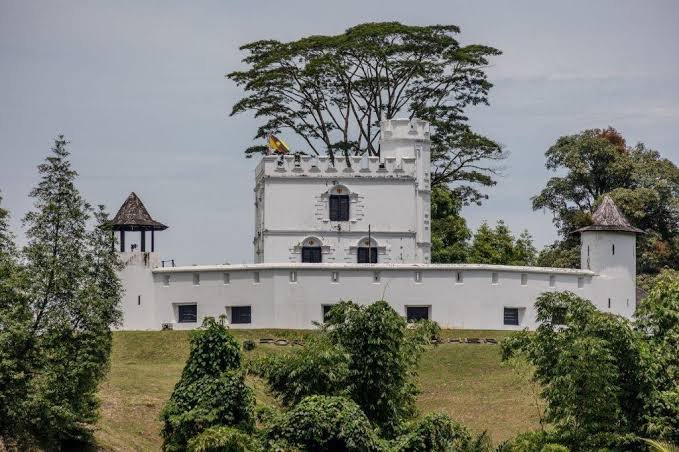
Fort Margherita
Built in 1879, Fort Margherita served as a defensive structure during the Brooke era.
Today it functions as a museum displaying Sarawak’s historical artifacts.
Cat Museum
The Cat Museum celebrates Kuching’s nickname as the “City of Cats.”
It features thousands of cat-related exhibits from around the world.
Food Culture
Kuching is widely regarded as one of Malaysia’s top food destinations.
Popular local dishes include:
- Sarawak Laksa
- Kolo Mee
- Manok Pansoh
- Midin stir-fry
- Kek Lapis Sarawak
- Tomato Kueh Teow
- Ayam Penyet
- Seafood
- Satay
Night markets and food courts offer affordable opportunities to sample authentic Sarawak cuisine.
Shopping
Visitors can shop at:
- Modern shopping malls
- Traditional markets
- Weekend bazaars
- Handicraft centers
- Souvenir shops
Popular purchases include:
- Traditional woven crafts
- Beadwork
- Pepper products
- Local snacks
- Sarawak textiles
- Indigenous artwork
Festivals
Kuching hosts numerous cultural celebrations throughout the year.
Major festivals include:
- Hari Raya Aidilfitri
- Chinese New Year
- Gawai Dayak
- Deepavali
- Christmas
- Wesak Day
These celebrations showcase Sarawak’s multicultural heritage.
Environment
Kuching places increasing emphasis on environmental sustainability.
Conservation efforts include:
- River protection
- Urban green spaces
- Wildlife conservation
- Recycling initiatives
- Eco-tourism development
Nearby protected forests preserve some of the world’s oldest tropical rainforests.
Investment Opportunities
Growing sectors include:
- Tourism
- Hospitality
- Real estate
- Education
- Renewable energy
- Digital technology
- Healthcare
- Agriculture
- Eco-tourism
Government support continues to encourage investment across these industries.
Future Development
Kuching continues to modernize through:
- Smart city initiatives
- Public transport improvements
- Sustainable urban planning
- Digital transformation
- Tourism expansion
- Infrastructure upgrades
Future projects aim to improve quality of life while preserving the city’s unique cultural and natural heritage.
Conclusion
Kuching is one of Malaysia’s most distinctive cities, combining rich history, multicultural traditions, natural beauty, and modern development. From its scenic waterfront and historic landmarks to its vibrant food culture and nearby rainforests, the city offers something for every visitor.
As Sarawak continues to grow, Kuching remains at the forefront of economic development, education, tourism, and environmental conservation. Its welcoming atmosphere, diverse communities, and strong commitment to sustainable progress ensure that it will remain one of Malaysia’s most attractive destinations for residents, students, investors, and travelers alike.